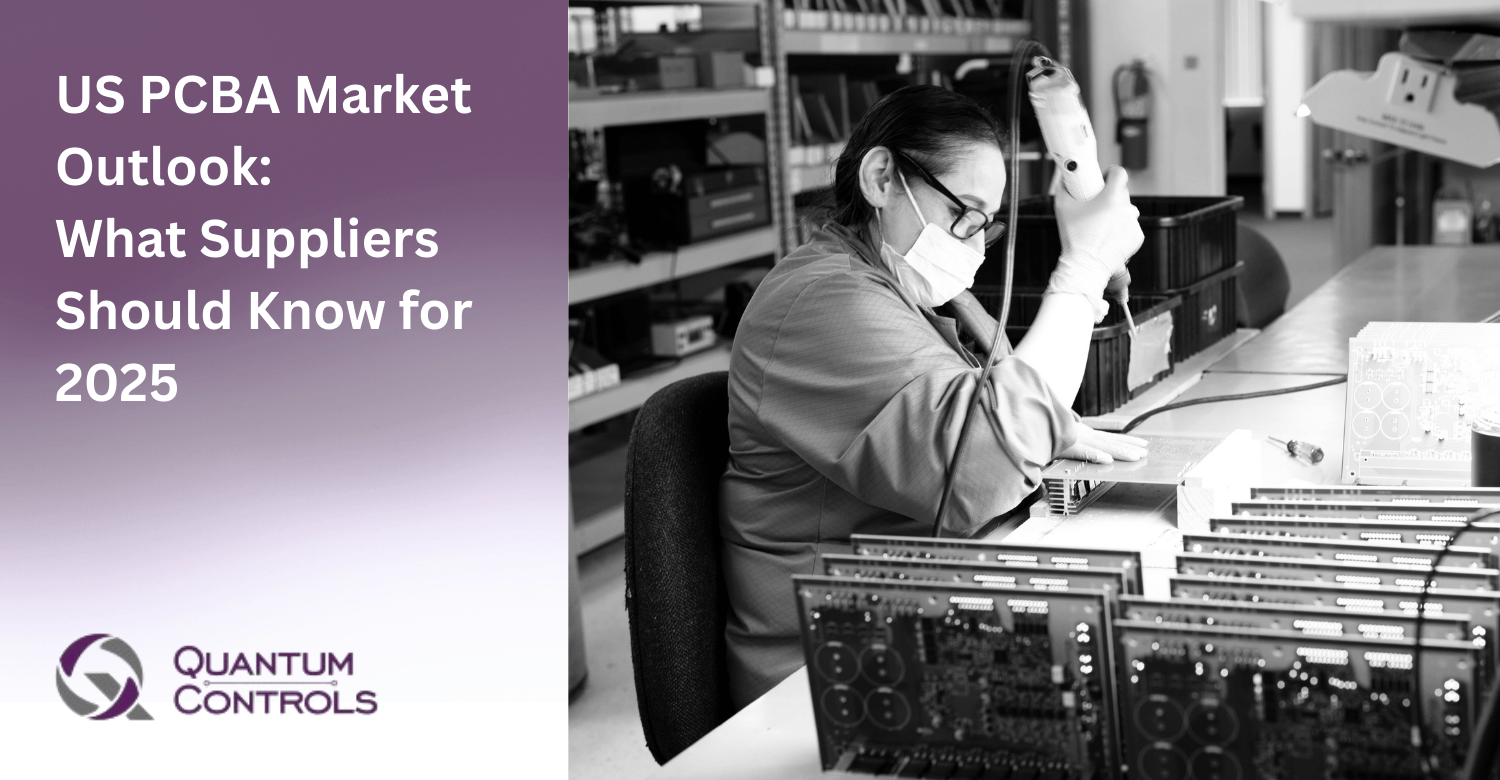
The US Printed Circuit Board Assembly (PCBA) sector is seeing steady growth in the face of supply chain challenges, rising costs, and evolving global dynamics. As Quantum Controls continues to deliver innovative solutions in electronic motor control design and manufacturing from Chanhassen, MN, this overview highlights key trends and risks shaping the marketplace for OEMs, startups, and engineering leaders.
North America and US PCBA Market Snapshot
- North America’s PCBA market is expected to reach $30.46 billion in 2024, with the US maintaining a dominant ~82% share of demand—translating to a US market size of approximately $25 billion in 2025. Growth is forecast to continue through 2033, with the US market potentially reaching $31 billion (CAGR ~3.2%).
- Globally, the PCBA market is set to expand from $76.9 billion in 2024 to $129.2 billion by 2034, a robust 5.3% CAGR, suggesting stronger growth opportunities outside North America.
Short-Term US Market Trends
- US market growth (2025–2031): Projected CAGR ranges from 1.7% to 3.2%, lower than global averages.
- Global momentum: Growth is faster worldwide, reflecting expansion in regions and tech sectors not limited by current US constraints.
The Five Biggest Challenges Facing PCBA Suppliers
1. Component Supply and Lead Time Volatility
Despite improvements since the 2021–2023 shortages, semiconductor lead times remain unpredictable:
- MLCCs: 16–22 weeks
- MCUs: 20–30 weeks
- Power ICs: 18–26 weeks
- FPGAs: 30–40+ weeks
- Advanced AI and high-performance electronics are driving up demand and lead times for critical PCB materials—from 8–12 weeks to 20–30 weeks in some cases.
2. Raw Material Constraints and Cost Pressures
- Copper foil, epoxy, and fiberglass are in tight supply due to geopolitical and extraction limits.
- Costs for materials and logistics are increasing due to inflation and shipping costs.
- Gold for finishes like ENIG has surged ~30%, prompting businesses to evaluate lower-cost alternatives such as HASL or tin.
3. Trade, Tariffs, and Geopolitical Risks
- Persistent 25% tariffs on Chinese electronics/components keep costs elevated.
- Sourcing production outside China (e.g., India, Vietnam) often costs 10–15% more and takes longer.
- US supply remains highly dependent on the Asia-Pacific, exposing the industry to shocks and disruptions.
4. Supply Chain Fragility and Visibility
Complex, global supply chains present challenges in real-time tracking, risk management, and logistics reliability. Port congestion or freight delays can halt production—especially where just-in-time inventory is the norm.
5. Skilled Workforce and Reshoring Bottlenecks
- Decades of offshoring have eroded North America’s skill base, making domestic talent for PCBA rare.
- New incentives (such as tax credits) bring traceability and sourcing compliance requirements.
- Expanding US manufacturing capacity will require substantial investments in advanced equipment and the recruitment of top talent.
Key Takeaways for Manufacturing Leaders
- The US PCBA market is large but growing slowly; global opportunities are expanding faster.
- Persistent supply chain, cost, and workforce challenges demand proactive management and strategic sourcing.
- Quantum Controls remains committed to innovation, accountability, and partnership across all stages of electronic control design and manufacturing.
If your organization is navigating the shifting PCBA landscape and seeking collaborative, technology-driven solutions, Quantum Controls can help address these challenges and unlock growth in a demanding environment.