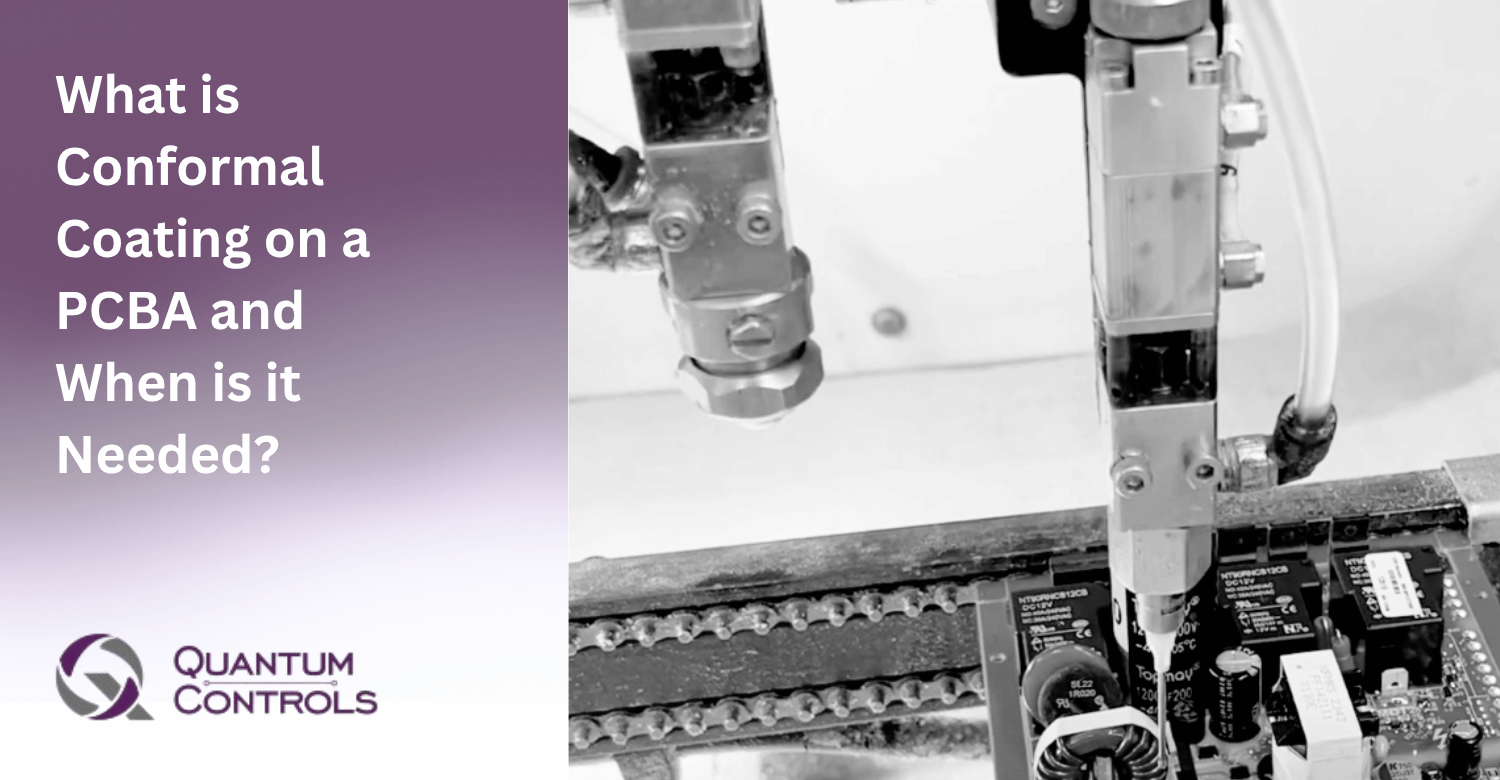
What is Conformal Coating on a PCBA and When is it Needed?
In electronics manufacturing, protecting a printed circuit board assembly (PCBA) is critical to long-term reliability and performance. One of the most widely used protection methods is conformal coating—a thin, polymer layer applied over the board and its components.
What Conformal Coating Does
Conformal coating serves as a protective shield, enabling PCBAs to withstand harsh environments and extend product life. Key benefits include:
- Moisture and Humidity Protection – Prevents corrosion, dendritic growth, and electrical shorts.
- Dust, Dirt, and Chemical Resistance – Blocks contaminants that degrade performance.
- Dielectric Insulation – Reduces arcing and leakage currents in high-voltage circuits.
- Mechanical Stress Mitigation – Adds resilience against vibration, shock, and thermal cycling.
The coating is typically applied at a thickness of 25–75 microns through spraying, dipping, brushing, or automated selective coating systems.
When is Conformal Coating Needed?
Not all PCBAs require conformal coating. In clean, controlled environments (such as office or consumer electronics), the added cost and complexity may not be justified. It is also important to understand that conformal coating does not provide an Ingress Protection (IP) rating.
However, in harsh or mission-critical applications, conformal coating is crucial to ensure long-term reliability and performance.
Common use cases include:
- Automotive Electronics – Safeguarding against humidity, road salt, vibration, and heat cycles.
- Industrial Electronics – Resistance to dust, chemical vapors, and environmental fluctuations.
- Medical Devices – Reliability under sterilization processes or exposure to bodily fluids.
- Marine & Outdoor Electronics – Defense against salt spray, humidity, and direct environmental exposure.
Trade-Offs to Consider
While conformal coating significantly improves reliability, manufacturers must balance its advantages against the added costs, increased process time, and inspection challenges. Coated assemblies can also be more difficult to rework or repair, making quality control during application critical.
At Quantum Controls, we have advanced conformal coating capabilities used in a variety of applications. Let’s discuss the necessity of conformal coating for your PCBA needs. As the PCBA landscape continues to evolve, organizations looking for collaborative, technology-focused solutions can turn to Quantum Controls to overcome challenges and drive growth in today’s competitive environment.