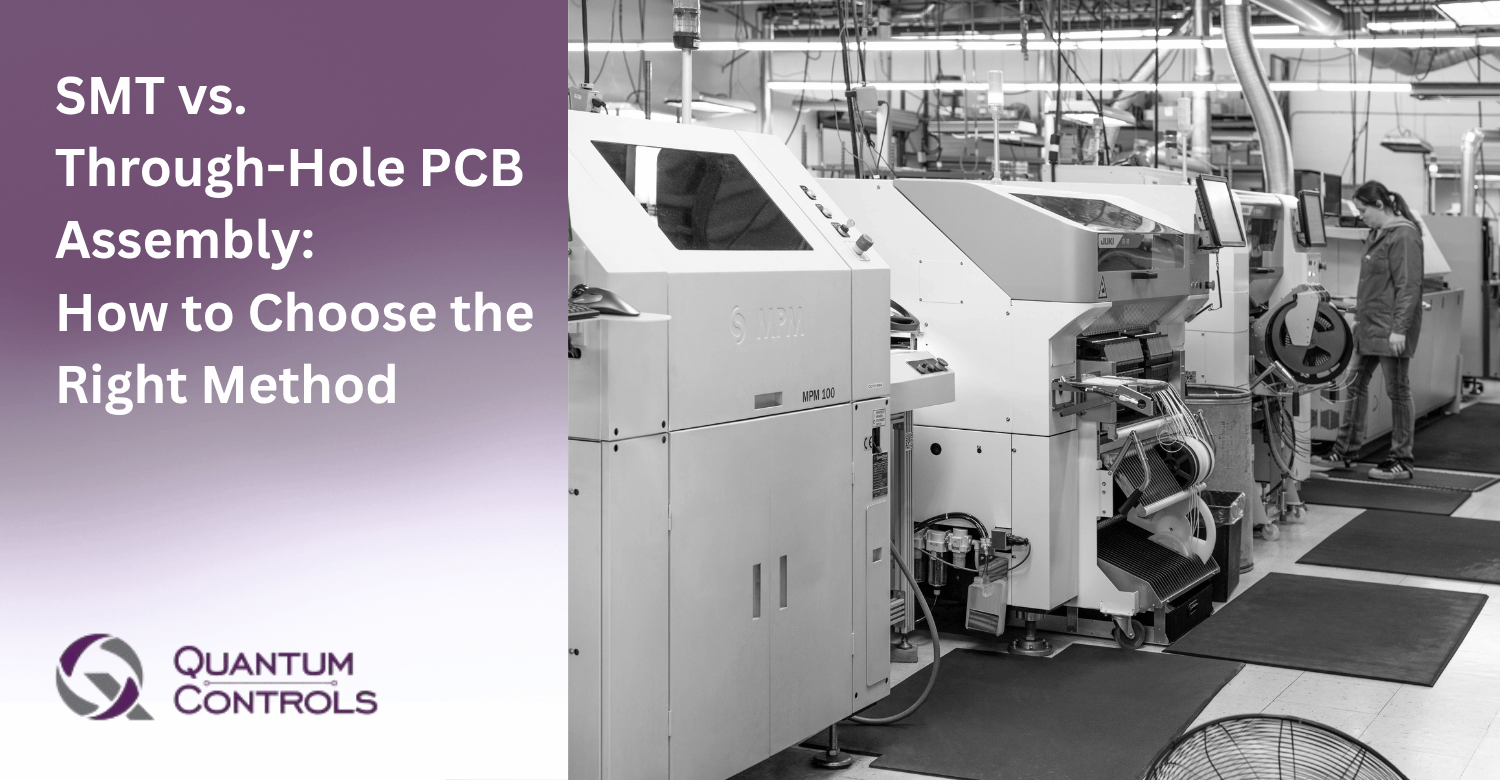
SMT vs Through-Hole Assembly: When Each One Makes Sense
When it comes to building electronic products, not all assembly methods are created equal. Surface Mount Technology (SMT) and through-hole assembly are the two main methods for attaching components to a printed circuit board (PCB). Each method has unique advantages and is best suited for specific applications.
Understanding the difference can save time, reduce costs, and improve product reliability.
What is Surface Mount Technology (SMT)?
Surface-mount technology places components directly on the PCB surface. Modern pick-and-place machines can position tiny chips, resistors, and capacitors with incredible accuracy.
Advantages of SMT:
- Supports high-density board layouts for smaller devices
- Enables faster automated assembly, reducing labor costs
- Ideal for lightweight, low-profile designs
- Compatible with high-speed electronics due to precise trace routing
SMT is widely used in smartphones, medical devices, industrial sensors, and aerospace electronics, where space and weight are critical.
What is Through-Hole Assembly?
Through-hole assembly involves inserting component leads into pre-drilled holes on the PCB and soldering them on the opposite side.
Advantages of Through-Hole Assembly:
- Provides strong mechanical connections for heavy or high-stress components
- More durable in high-vibration environments
- Easier to prototype and modify in small-scale production
- Useful for connectors, switches, and large capacitors
Through-hole is often chosen for industrial equipment, automotive electronics, and aerospace systems, where reliability under stress is paramount.
Choosing the Right Method
The decision between SMT and through-hole depends on your product requirements:
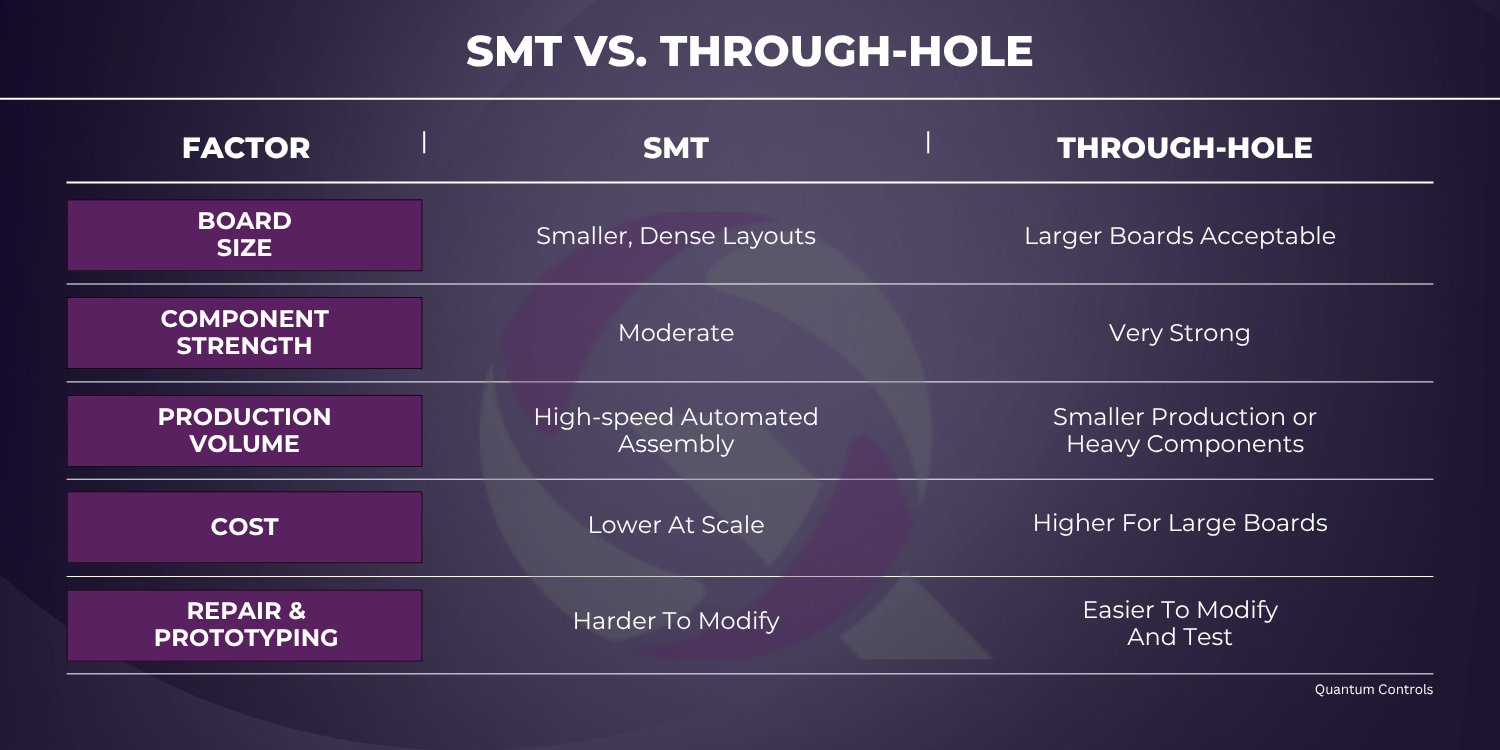
SMT suits smaller, denser board layouts with moderate component strength and high-speed, automated, volume production at lower cost at scale, though it’s harder to modify. Through-hole assembly handles larger boards with very strong connections for smaller runs or heavy components, higher costs for big boards, and easier modification and testing during prototyping.
In many modern electronic products, manufacturers use a hybrid approach, combining SMT for small components and through-hole technology for connectors and mechanical parts.
Why a Skilled Manufacturer Matters
A professional PCBA manufacturer ensures that SMT and through-hole components are integrated efficiently. They know how to:
- Optimize board layout for assembly
- Maintain quality across high-volume production
- Test and inspect boards for reliable performance
At Quantum Controls, Inc., we specialize in both SMT and through-hole assembly, helping customers select the right approach for their products while maintaining strict quality standards.
Quantum Controls Can Help
Choosing between SMT and through-hole assembly isn’t just a technical decision—it impacts cost, reliability, and product performance. By understanding the advantages of each method and working with an experienced manufacturer, engineers can design electronics that are both innovative and durable.
Quantum Controls combines engineering depth, precision assembly, and hands-on expertise to ensure your electronics are built to perform.
FAQs
What is the difference between an SMT and a through-hole PCB assembly?
SMT places components directly on the surface of a PCB, which supports smaller, denser, and more automated builds. Through-hole assembly inserts component leads through drilled holes and solder them in place, creating a stronger mechanical bond for parts that must handle vibration, stress, or frequent handling.
When should I choose SMT for a PCB design?
SMT makes the most sense when you need a compact board, high production volume, and efficient automated assembly. It is often the better choice for modern electronics where saving space, reducing labor, and keeping costs down at scale matter most. SMT is widely used in products that need fast, precise manufacturing.
When is through-hole assembly the better PCB option?
Through-hole assembly is usually the better choice for heavy components, connectors, switches, and products that will face vibration or physical stress. It is also easier to prototype, modify, and repair during early-stage development. For industrial and automotive applications, that extra strength often makes a big difference.
Can SMT and Through-hole design be used on the same printed circuit board?
Yes, many products use a hybrid design that combines both methods. SMT is often used for small electronic components, while through-hole is reserved for connectors, large capacitors, or parts that need added durability. This approach gives engineers flexibility and helps balance size, reliability, and manufacturability.
Why does choosing the right PCB assembly method matter for product performance?
The right assembly method affects cost, reliability, repairability, and long-term product performance. A board built with the wrong mix of SMT and through-hole parts can be harder to manufacture or less durable in real-world use. Quantum Controls helps customers choose the best assembly approach so the final product is built for its intended environment.