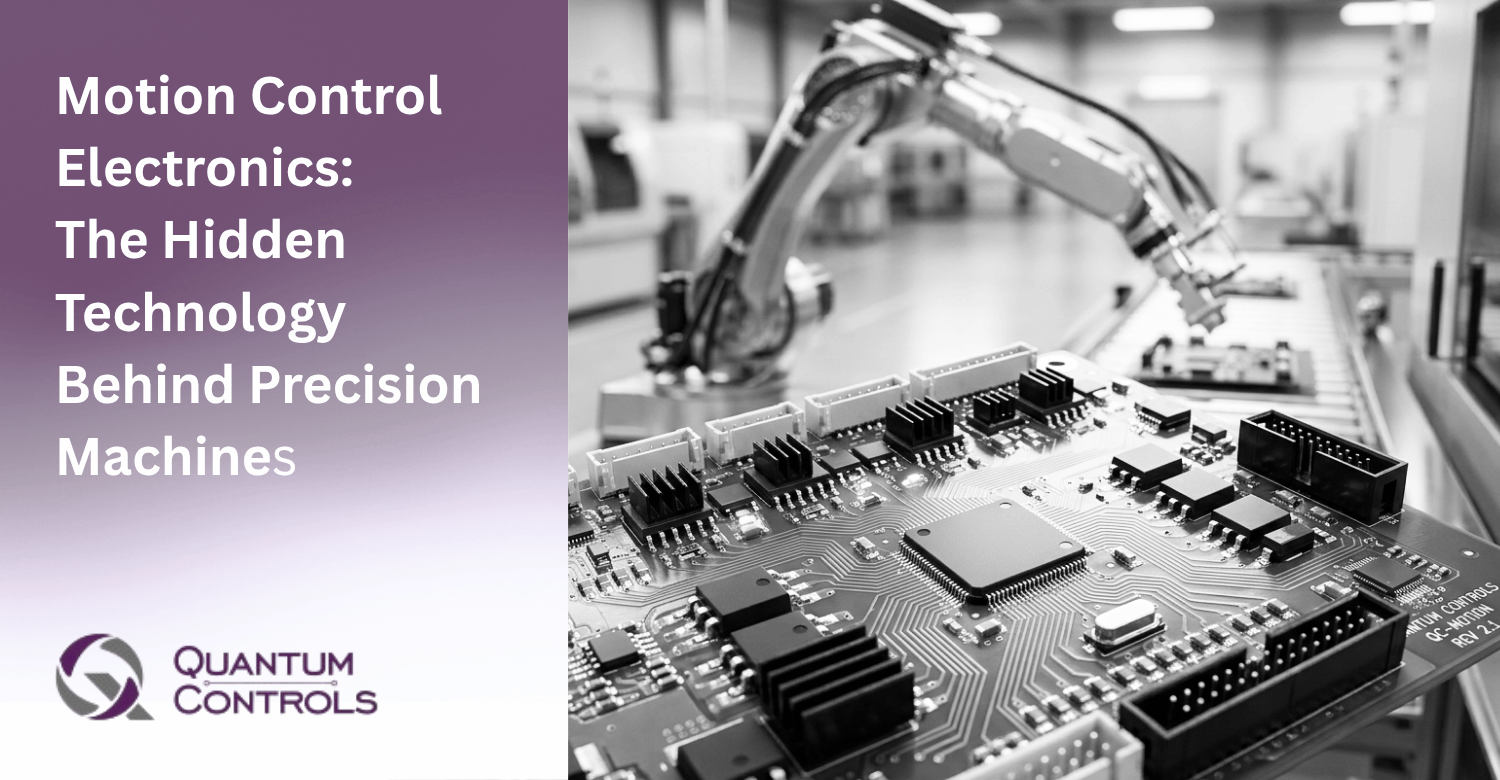
Precision motion is essential in modern manufacturing, robotics, and automated equipment. Whether it is a robotic arm placing components or a machine tool cutting metal, accuracy and reliability depend on sophisticated electronics.
At Quantum Controls, we develop custom motion control PCBAs that enable precise, reliable movement in industrial systems.
What Is Motion Control Electronics?
Motion control electronics regulate the movement of motors and actuators. These systems use sensors, processors, and power electronics to control motion with high precision.
Typical components of motion control PCBAs include:
- Microcontrollers and embedded processors
- Motor drivers and power electronics
- Encoder interfaces
- Position and feedback sensors
- Communication interfaces
Together, these components help machines move with remarkable accuracy.
Key Challenges in Motion Control PCBA Design
Motion control electronics must perform reliably in demanding environments. Engineers must account for several challenges, including electrical noise, thermal management, real-time feedback, and system reliability.
Electrical Noise
Industrial environments often contain significant electromagnetic interference that can disrupt signals. Careful layout, shielding, and component selection help reduce noise and keep systems stable.
Thermal Management
Motor control circuits often handle high current levels, which can create heat. Good thermal design helps protect components and supports long-term performance.
Real-Time Feedback
Motion systems rely on continuous feedback from sensors and encoders to maintain accuracy. Fast, reliable signal processing helps the system respond immediately when conditions change.
System Reliability
Downtime in automated production environments can be extremely costly. That is why motion control PCBAs must be engineered for durability, consistency, and dependable performance.
The Role of Thoughtful PCBA Engineering
Careful circuit design, layout, and component selection allow motion control systems to operate smoothly and reliably. At Quantum Controls Incorporated, we focus on designing motion control electronics that deliver precision, durability, and long-term performance.
When done right, the electronics fade into the background while machines operate seamlessly. In advanced manufacturing, that quiet reliability helps keep production moving.
FAQs – Frequently Asked Questions
Below are answers to common questions about motion-control electronics, motor-control PCBAs, and industrial motion-control systems.
What are motion control electronics?
Motion control electronics are the systems that control how motors and actuators move in industrial equipment. They use sensors, processors, and power circuits to manage speed, position, and timing with precision. In simple terms, they help machines move the right way, at the right moment, every time. Contact Quantum Controls to discuss custom motion control solutions.
Why are motion control PCBAs important in robotics?
Motion control PCBAs are important because they translate commands into accurate movement for robotic arms, automated tools, and production machines. They connect feedback from encoders and sensors to the power circuits that drive motion. That combination keeps robots precise, responsive, and repeatable in real-world industrial environments, where even small errors can affect quality and uptime.
How do motion control electronics improve precision in manufacturing?
Motion control electronics improve precision by constantly adjusting motor movement based on real-time feedback. If a machine drifts even slightly, the system corrects it before the error grows. That makes them essential for CNC equipment, robotics, and automated assembly lines. Quantum Controls designs motion-control PCBAs to ensure reliable performance in demanding production settings.
What challenges do engineers face in motion control PCBA design?
Engineers face electrical noise, heat buildup, and the need for instant feedback when designing motion-control PCBs. Industrial environments can be harsh, so the circuit must stay stable and accurate under pressure. Good layout, component selection, and thermal design all matter. Careful engineering helps prevent downtime and keeps motion systems running smoothly.
How do custom motion control systems support industrial automation?
Custom motion control systems support industrial automation by matching the electronics to the exact needs of the machine, process, or production line. That means better performance, fewer faults, and easier integration with sensors and controls. If your application requires precise motion control and long-term reliability, Quantum Controls can help you build a motion-control PCBA that meets your needs.